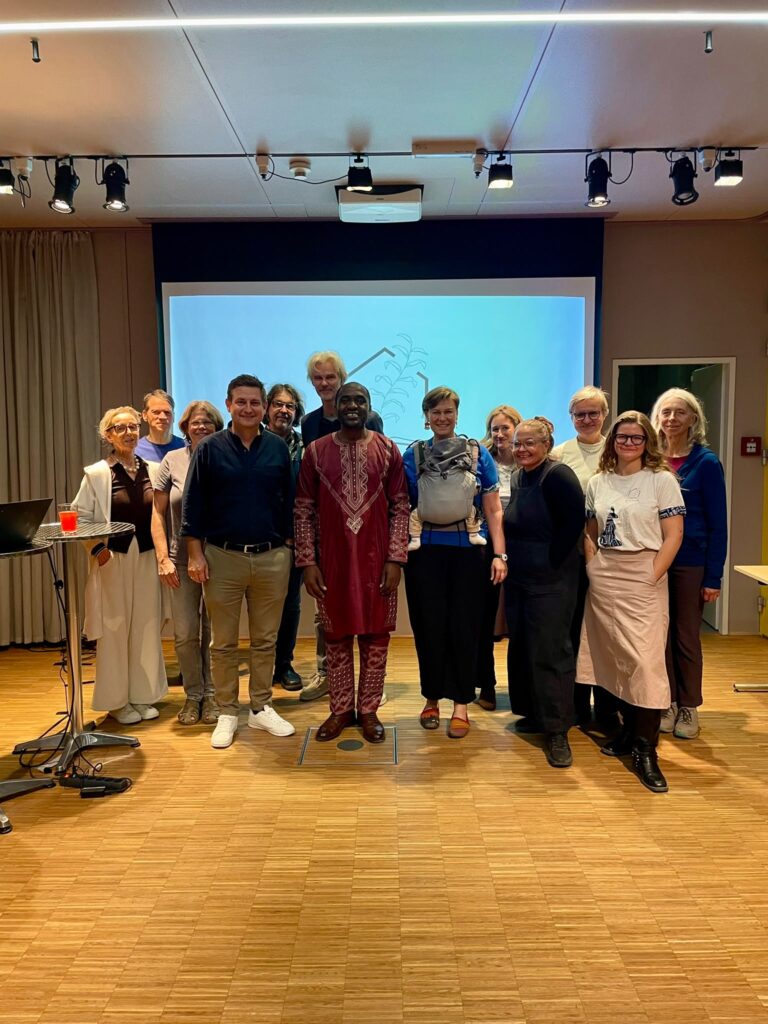
On October 1, 2026, City of Ubuntu celebrated Ubuntu Day in Vienna with an evening dedicated to Ubuntu in Architecture. At Gleis 21 in Vienna’s Sonnwendviertel, we explored how architecture can connect people, strengthen communities and bring the Ubuntu philosophy to life.
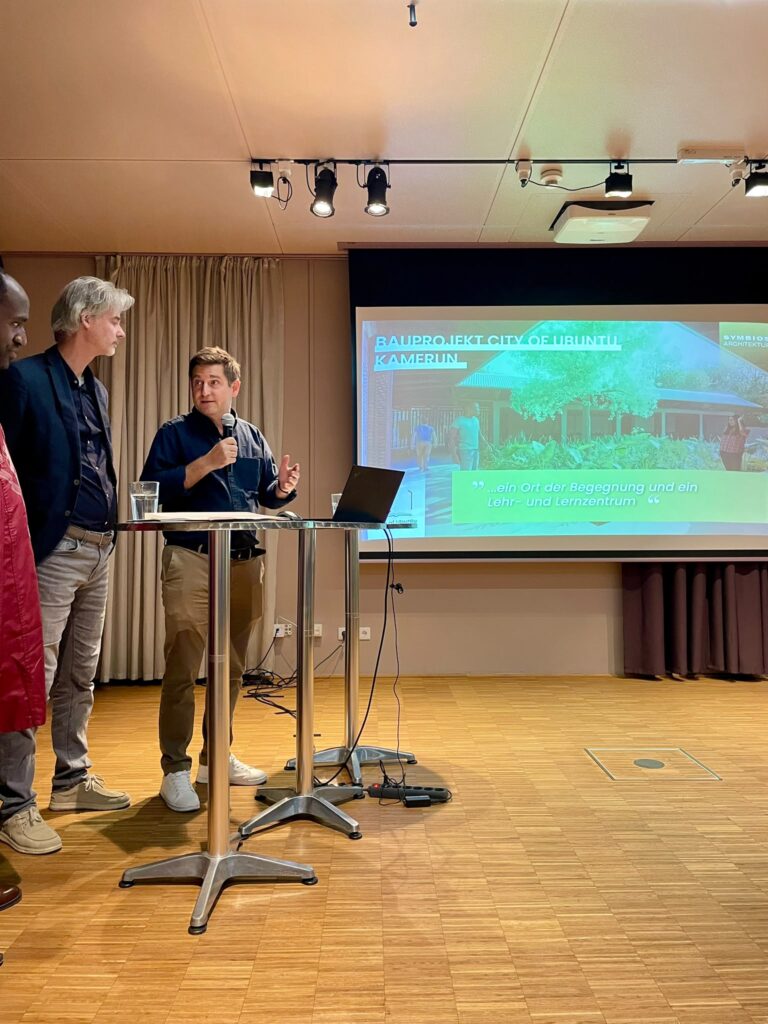
Architects Philipp Broinger and Herwig Ferch presented our planned building project in Sanki, Cameroon. Architectural researcher Marlene Wagner shared insights from projects in Africa, while architect Veronika Felber, a member and co-developer of Gleis 21, introduced the community-driven vision behind our venue.
Building the Ubuntu Centre in Sanki, Cameroon
City of Ubuntu-founder Jean de Dieu Tagne welcomed us warmly on this Ubuntu evening, introducing the topic of creating spaces that facilitate encounter and community.
Architects Philipp Broinger and Herwig Ferch of Symbios Architektur, members of the City of Ubuntu Austria team, presented our plans for a building that combines local construction methods with a flexible, modular design.
The first stage will use locally made earth bricks and provide sleeping rooms, sanitary facilities, a cooking area and a communal space for meetings and training. The design also considers circular economy principles, including solar energy, rainwater harvesting and recycling.
Our aim is to create more than a building: a place where people can meet, learn and develop new opportunities together.
Gleis 21: Bringing the Village into the City
Architect Veronika Felber of Gleis 21 presented their community-driven approach, summed up in its motto: “Wir bringen das Dorf in die Stadt!” — “We bring the village into the city!”
The project is built around residents’ active participation and mutual commitment, with a focus on sustainable living, social encounters and solidarity both within and beyond the community. Its approach resonates strongly with Ubuntu: creating spaces where people support one another and make a good life possible together.
Marlene Wagner: Architecture Starts With People
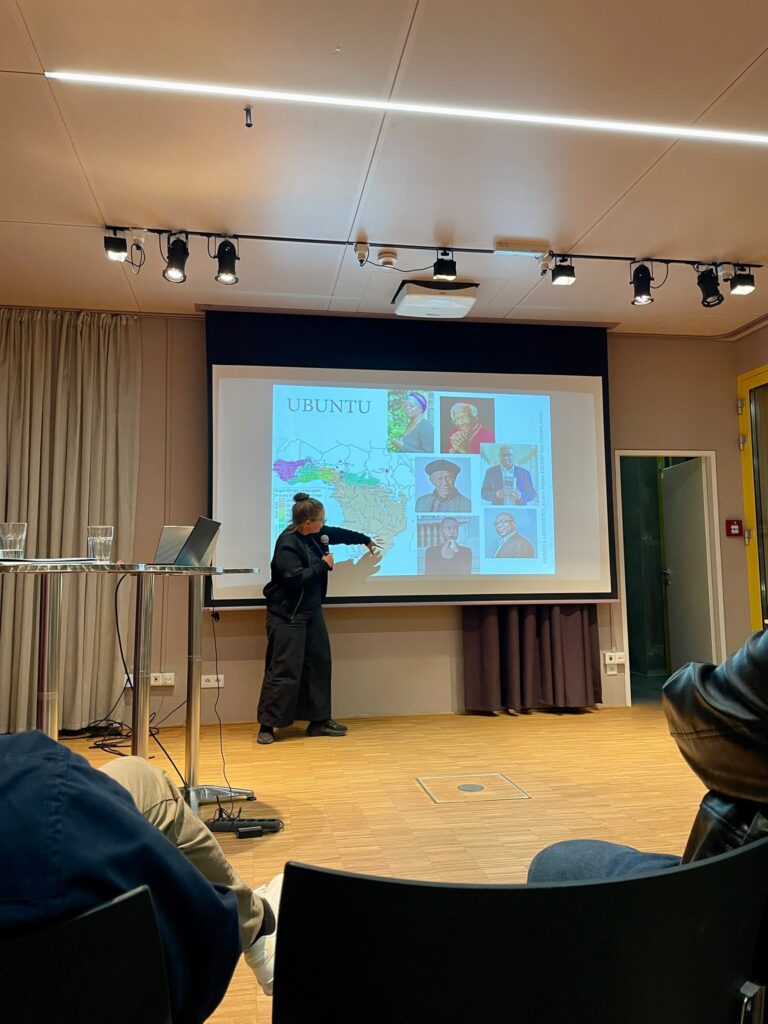
In the second part of the evening, architect and architectural researcher Marlene Wagner shared insights from Build Collective and architectural projects in southern and eastern Africa, giving us plenty of food for thought.
She began by referring to the United Nations vote concerning the abandonment of the Mercator projection, inviting us to reflect on how we represent and perceive the world. She then explored the meaning of Ubuntu, explaining that there is no direct translation and that different African thinkers and philosophers have offered different interpretations. A brief insight into Cameroonian architecture further connected these reflections to our project in Sanki.
One particularly memorable example was a pedestrian bridge in South Africa initiated by local residents and ultimately realised despite resistance from a major corporation.
The project showed that architecture is not simply about designing structures. It is also about working closely with people. The bridge was intended to connect two villages, and making it happen required collaboration, overcoming resistance and adapting initial concepts to the realities on the ground.
It takes a lot of Ubuntu to build a bridge!
Ubuntu in Architecture: Building Together
The evening highlighted how sustainable architecture depends on more than materials and technical solutions. It requires local knowledge, community involvement, environmental awareness and a willingness to learn from one another.
Whether developing a building in Cameroon or creating a community-led housing project in Vienna, the principle is the same: spaces can bring people together when they are shaped around human needs and shared responsibility.
After the presentations, we continued the conversations over a buffet, exchanged ideas and made new connections.
A big thank you to Philipp Broinger, Herwig Ferch, Veronika Felber and Marlene Wagner for sharing their knowledge and experiences, and to everyone who joined us at Gleis 21.
Ubuntu Day 2026 reminded us that building together is about more than architecture. It is about creating connections, nurturing community and putting Ubuntu into action.